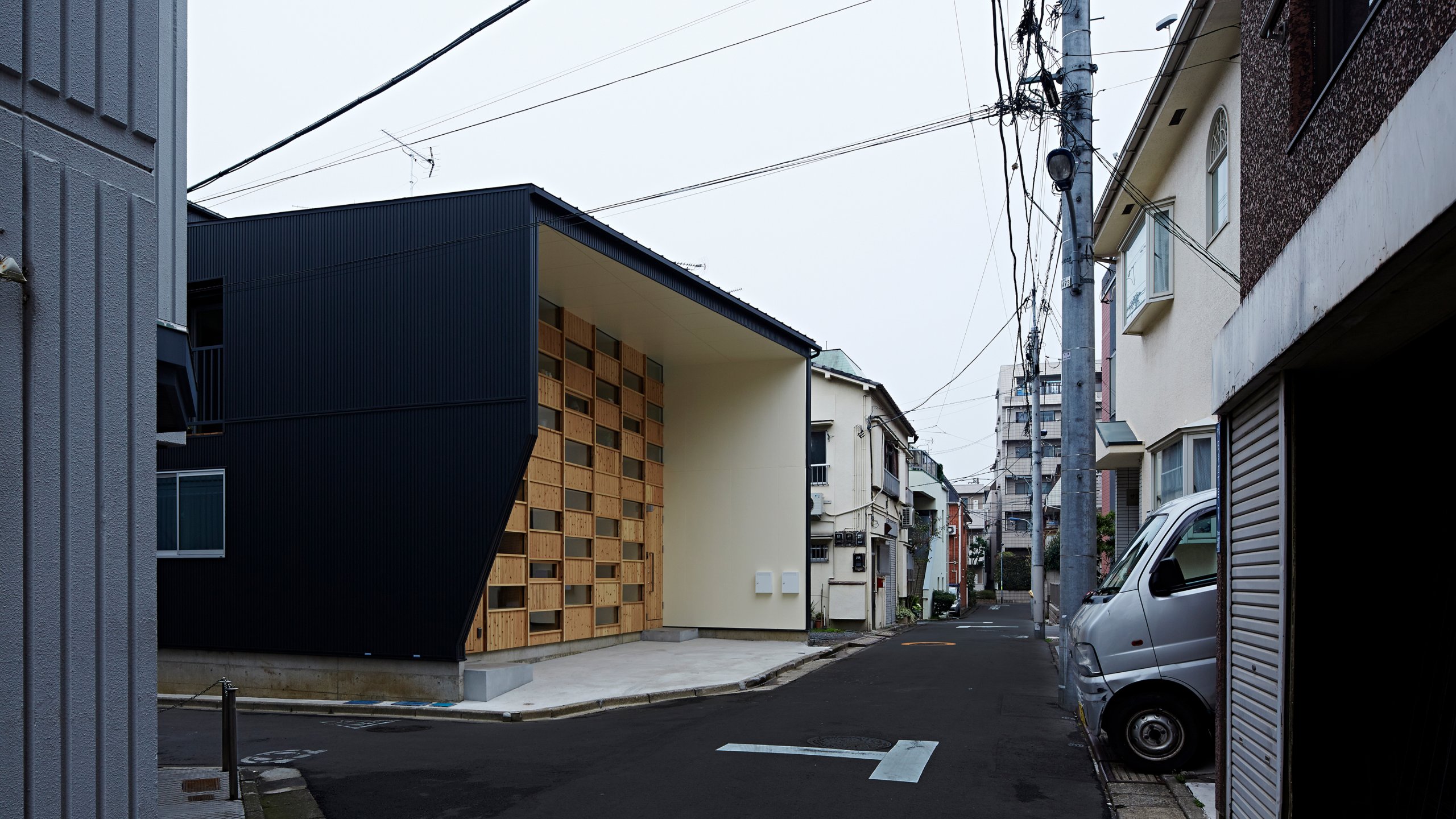
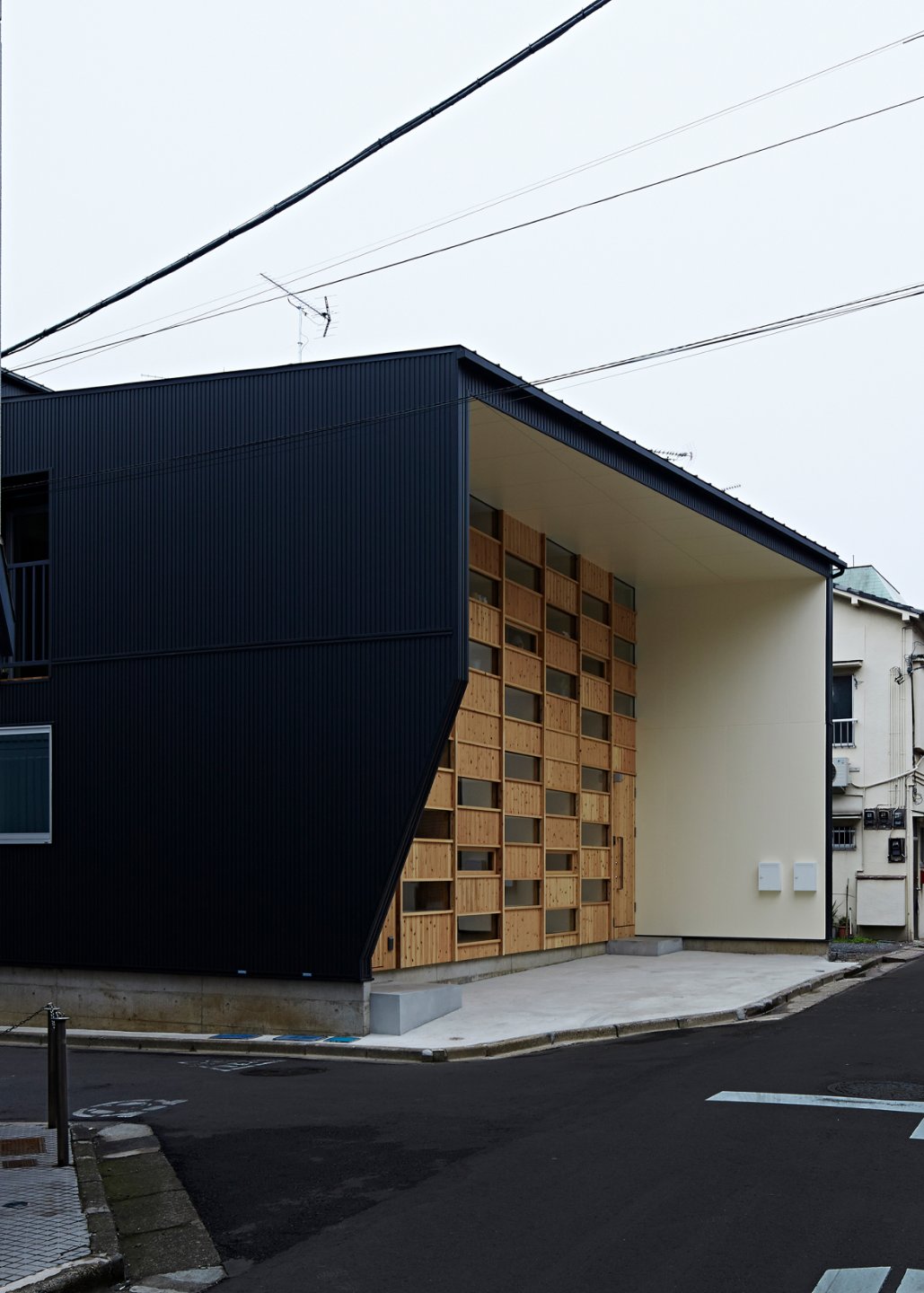
A house that makes the most of wood in an urban area where fire regulations and maintenance make timber hard to use. Eaves space under a cantilevered roof and fire walls allow wood to be used affordably, while checkerboard windows disperse steady north light into the interior.

The Checkerboard House
Data
- Completed
- 2015
- Primary Use
- Residence
- Project Type
- New build
- Structure / Scale
- Timber, 2 stories
- Site Area
- 90.32㎡
- Building Area
- 68.33㎡
- Total Floor Area
- 117.90㎡
- Architects
- Takeshi Shikauchi
- Joint Design
- Suzuki Yuko Architects
- Structural Design
- Ohno JAPAN
- Contractor
- Shinei
- Photography
- Kouichi Torimura / Kouichi Torimura Photography
Media
- Magazine
- L4_HOUSE DESIGN 5 (Korea)
- Magazine
- NISHA, August 2015 (Israel)
- Magazine
- Sumai no Sekkei, November/December 2015
- Magazine
- Nikkei Architecture, 25 September 2015
- Magazine
- MY HOME+, Vol.42
- Magazine
- Shinkenchiku Jutakutokushu (Housing Special), May 2016
A City House That Makes the Most of Wood
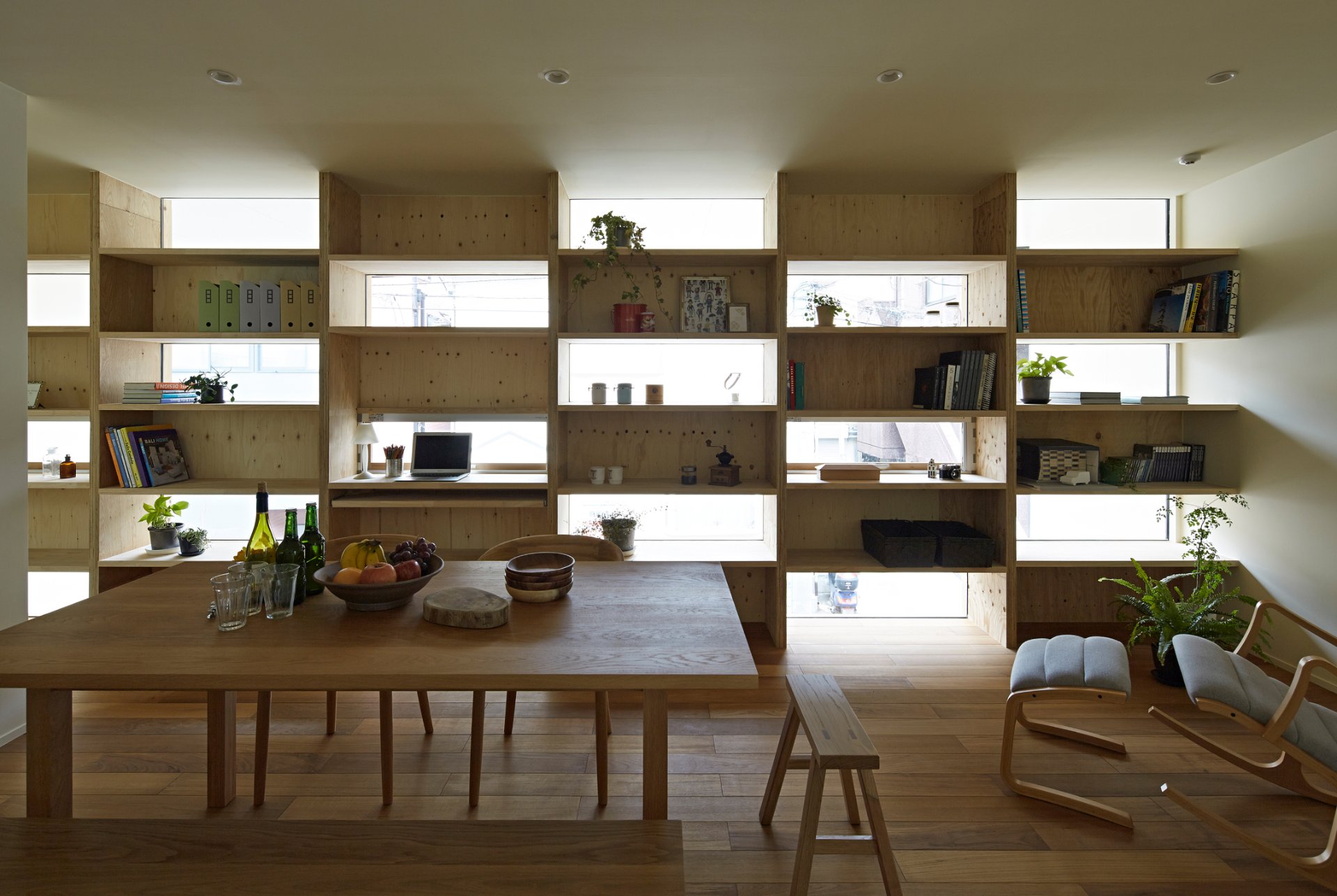
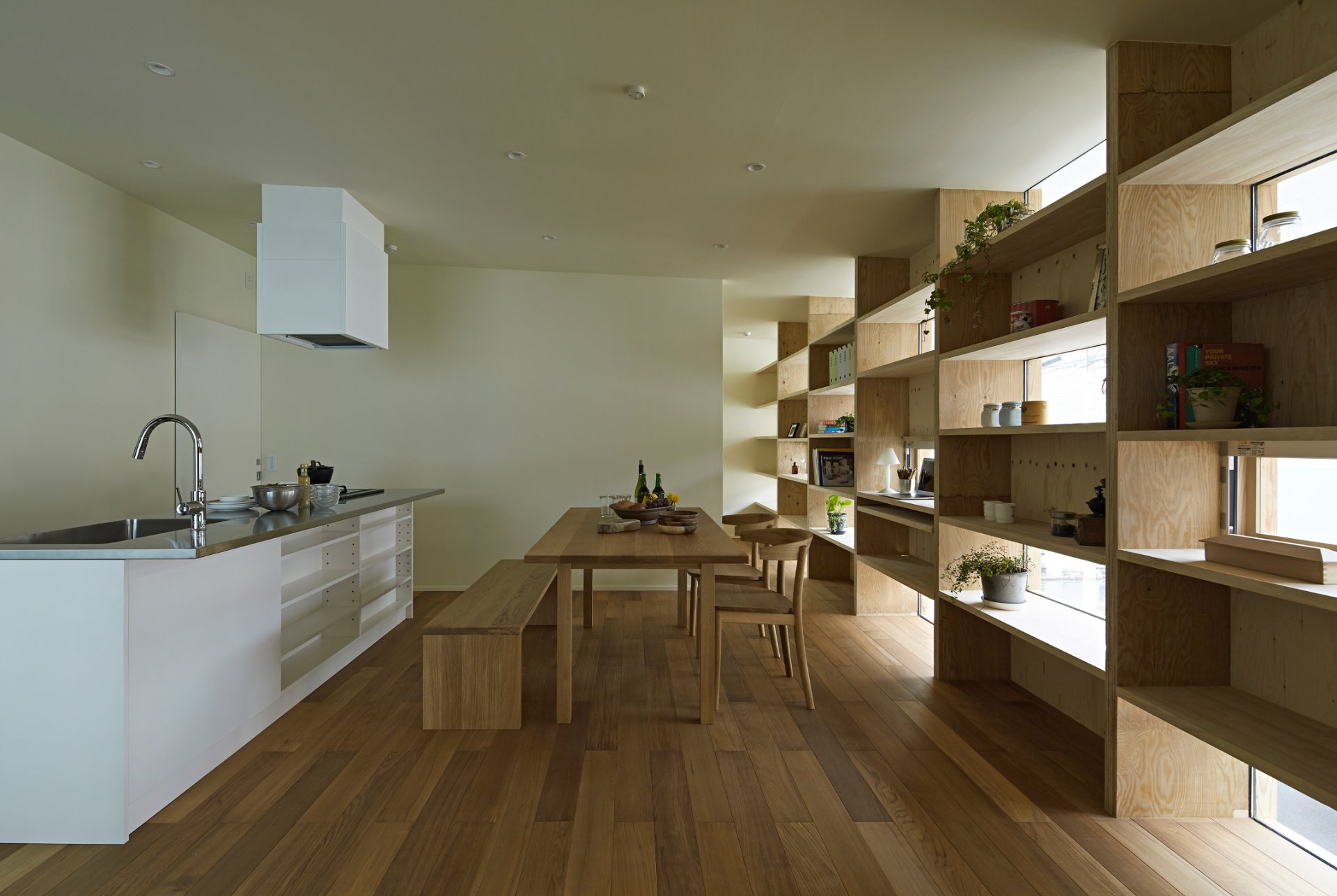
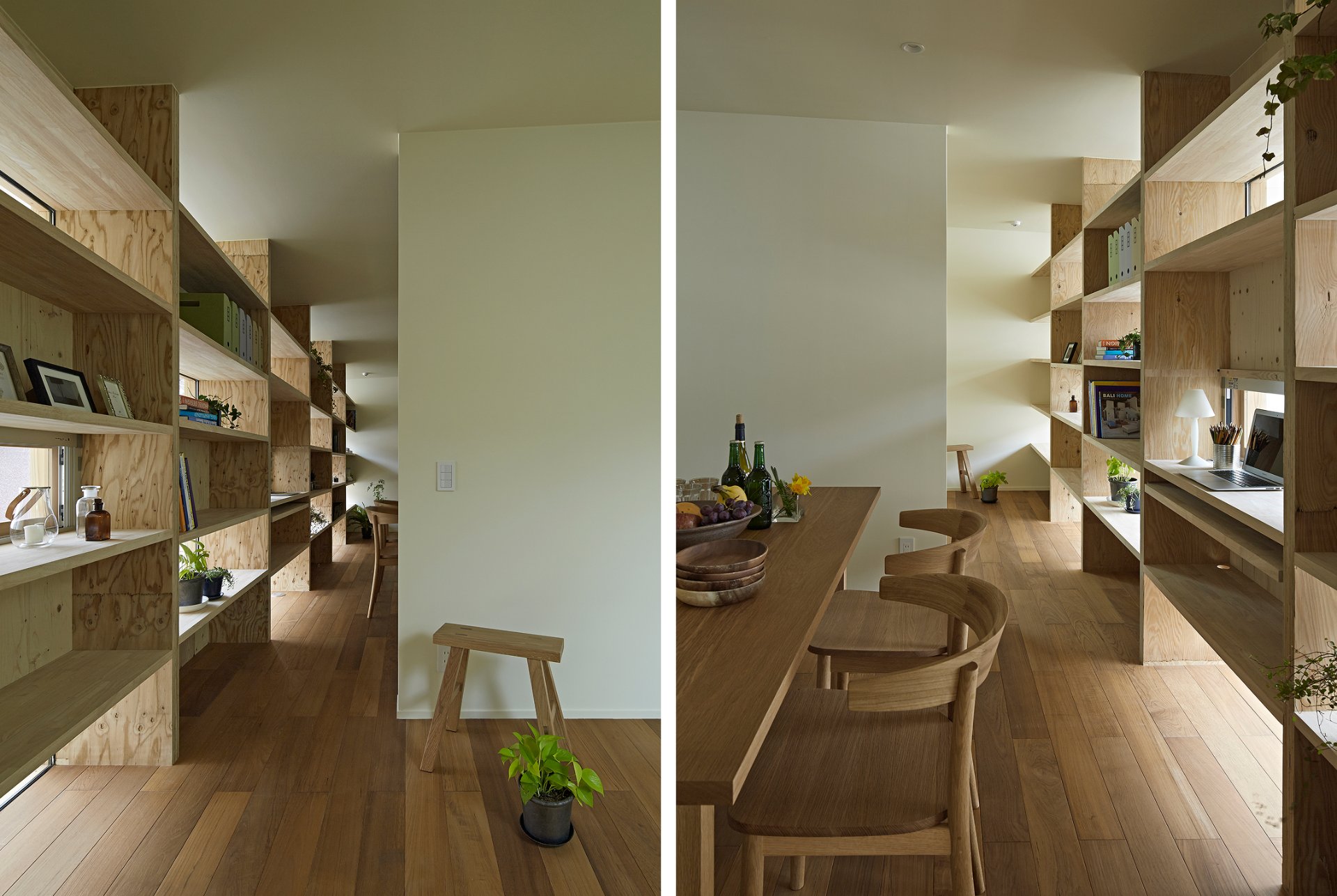
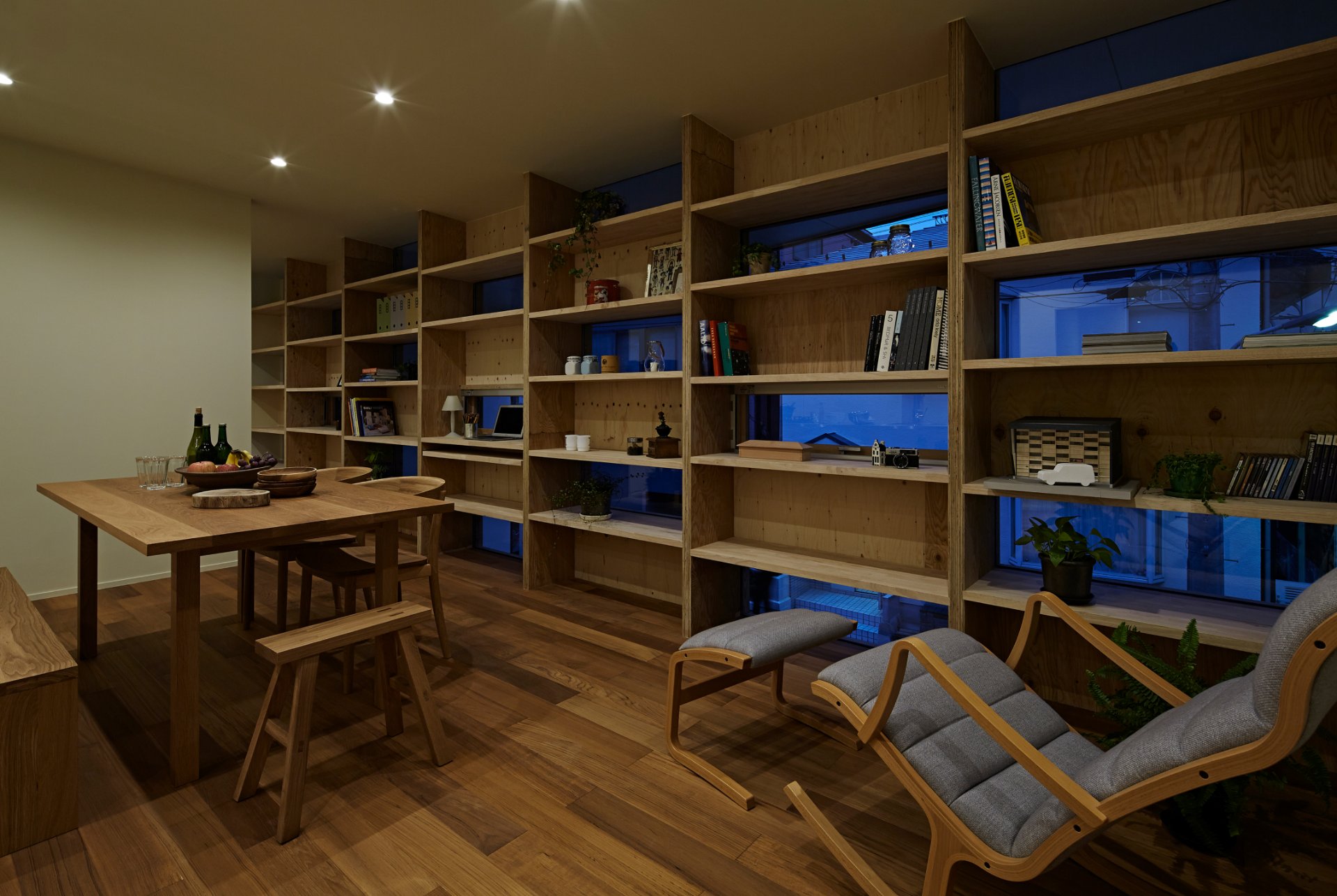
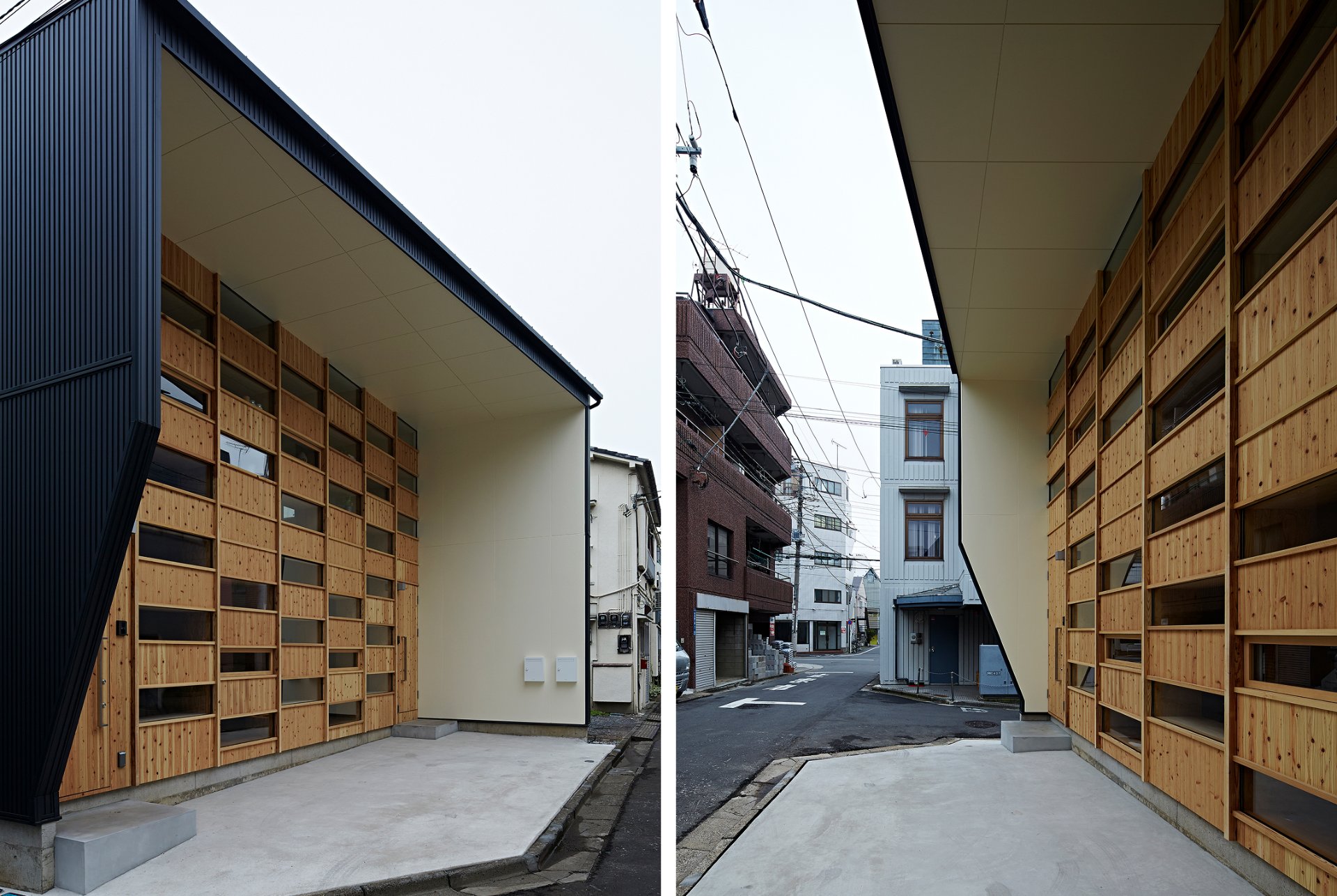
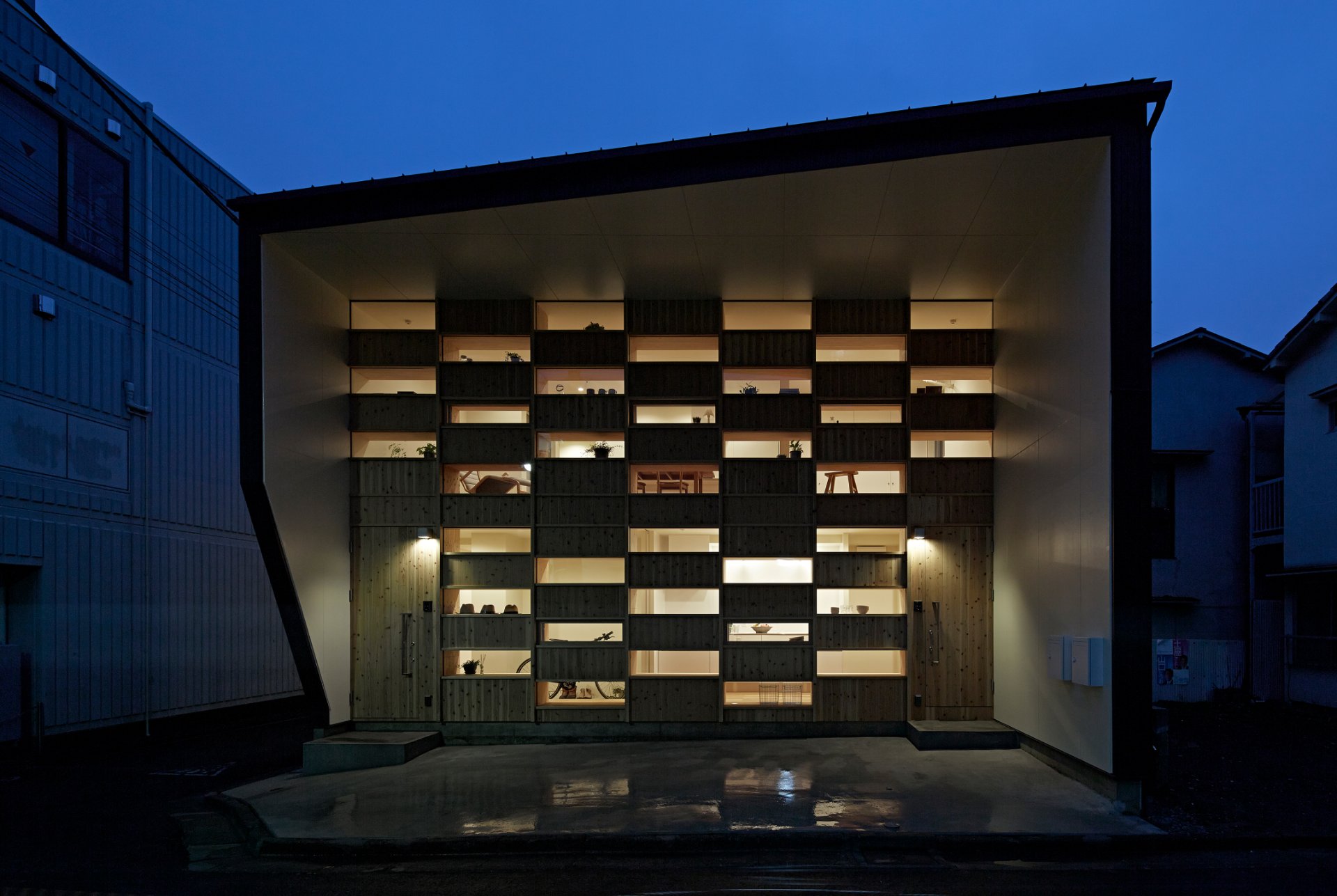
A city house built with wood. Using timber for houses in urban areas has become difficult. There are many timber houses, but from the standpoint of fire safety and maintenance, they require considerable expense. Even so, reconsidering the virtues of wood that traditional Japanese houses possessed—its softness, its texture, the ease of driving in a nail oneself—we set out to design “a city house that uses wood” while attending to fire safety and maintenance. At the parking space facing the road to the north, we set a roof that cantilevers out from 1.35m to 2.85m, creating a traditional Japanese eaves space. This rain-sheltered eaves space, together with fire walls on both sides, made it possible to use wood and wood-framed windows affordably even in a densely built-up area. The checkerboard windows, with a 50% opening ratio, draw light from different positions—the usual height, near the ceiling, and near the floor. In this way, steady north light is delivered, dispersed, into the interior throughout the day. The inner side of the windows forms deep shelves, where the owner can enjoy displaying small objects while they also serve as a gentle screen securing privacy from the surroundings.